
Sacramento Modification of Support Attorney
A support order issued last year may not reflect your financial reality today. Income shifts, job losses, remarriage, and custody changes all create valid legal grounds to revisit what the court decided, and your support order should change with them.
Schedule a Consultation- 14+Years of Experience
- 75+Family Cases Resolved
- 80%Client Referral Rate




When a Support Order No Longer Fits Your Life
California courts issue support orders based on circumstances at the time of the hearing. Those circumstances often change. A parent who received a raise, lost a job, or changed custody arrangements is living under different financial conditions and strains than when the original order was signed. Sacramento courts recognize this reality under California Family Code §3651, which allows either party to request a modification when there has been a material change in circumstances.
The standard is not a minor shift in pay or a temporary expense. Courts require a demonstrable, significant change that would affect the support calculation under current guidelines. Knowing what qualifies, how to document it, and when to file determines whether your request succeeds or stalls.
What Qualifies as a Material Change in Circumstances
Sacramento family courts examine specific, documented facts when evaluating a modification request. The most common qualifying changes include a substantial increase or decrease in either party's income, a significant shift in parenting time or custody arrangements, the loss of employment or a change in earning capacity, a child reaching the age of majority or a change in the child's financial needs, and one party's remarriage or cohabitation with a new partner, which may affect spousal support obligations.
Courts do not modify support based on a party's preference or minor fluctuations in expenses. The change must be measurable, documented, and sufficient to meaningfully affect the guideline calculation. Filing without that foundation wastes your time and money.
Support Modification Services in Sacramento
How the Modification Process Works in Sacramento County
Filing a request to modify support in Sacramento County begins with completing and filing an Order to Show Cause (OSC) or a Request for Order (RFO) with the Sacramento Superior Court, Family Law Division. The filing must include current income and expense declarations, documentation of the changed circumstances, and a proposed modified order. The court sets a hearing date, typically 4 to 8 weeks after filing.
At the hearing, both parties present financial evidence. I prepare income documentation, tax returns, pay stubs, and any relevant custody records in advance. Judges in Sacramento County apply the guideline formula for child support with limited discretion. Spousal support hearings involve more judicial judgment, which is where preparation and presentation make the difference between an order that protects your interests and one that doesn't.
Contested modifications, where the other party disputes the change, can take longer. Uncontested cases, where both parties agree on the modification, can be resolved through a stipulated order without a full hearing. I identify early whether the opposing party is likely to agree and structure the filing strategy accordingly.
Every month without a filed modification is a month the current unfair order stands. I calculate your updated guideline number before we file, so you know exactly what you're working toward.


Don't Wait for Arrears to Force the Issue
A support order that no longer fits your income won’t fix itself. Sacramento courts won't adjust what you owe retroactively once arrears start/ to add up. The right time to file is now.
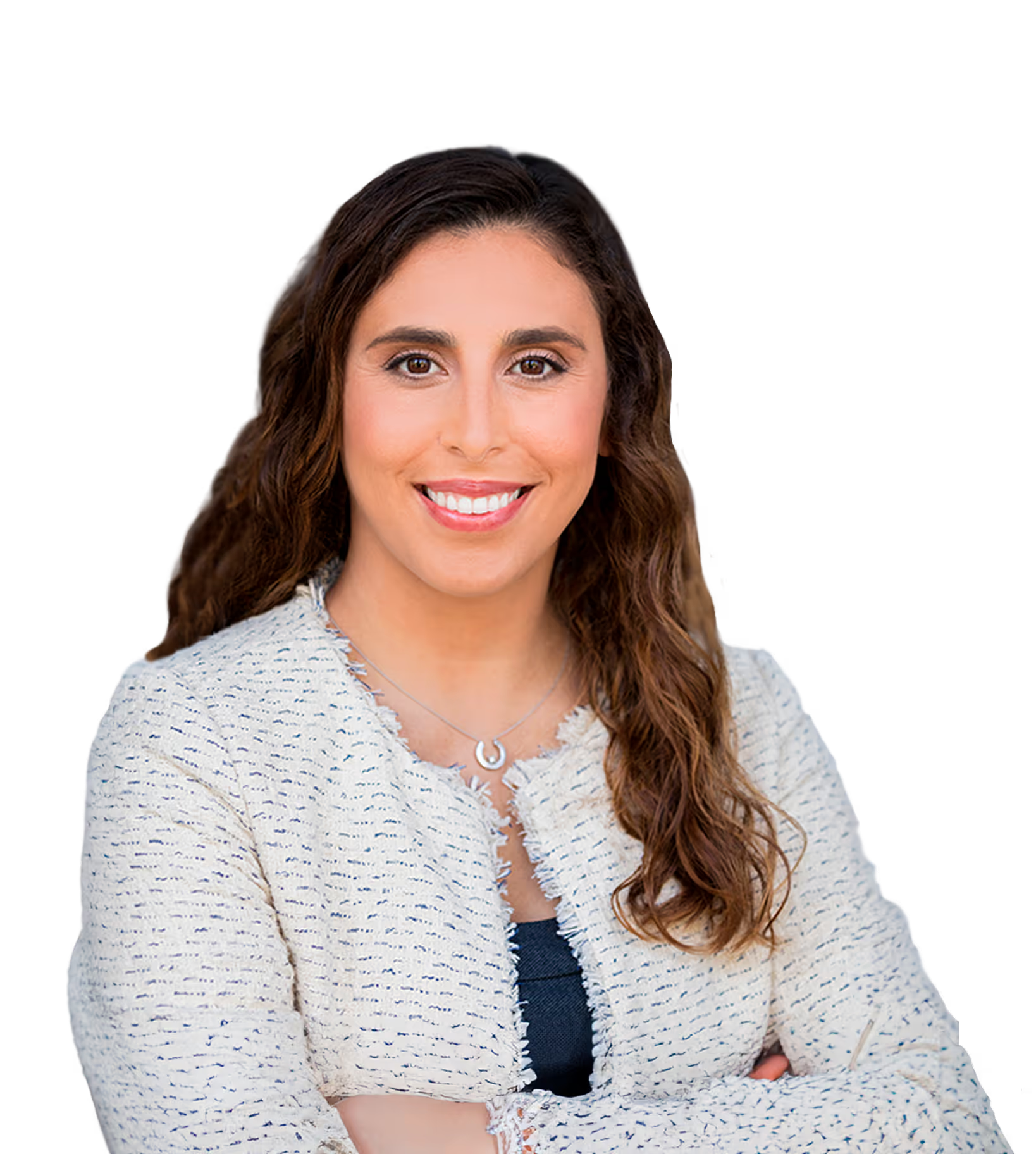
Meet Jessica Abdollahi
Direct Representation. Documented Facts. Results That Hold.
"Support modification cases are decided on numbers, not arguments. I build every case on verified records and precise documentation of what changed and when. Courts respond to evidence. That is what I prepare."



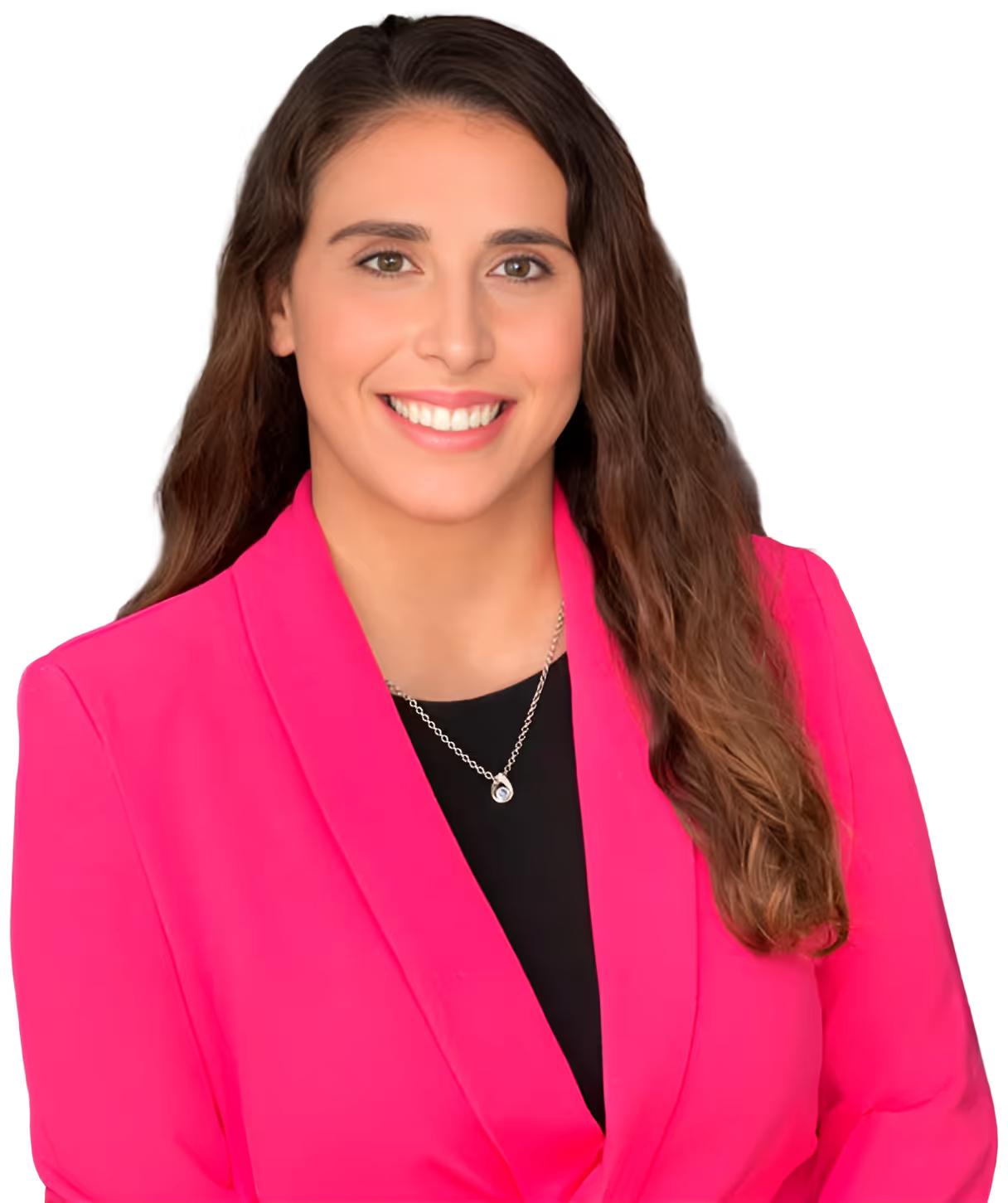
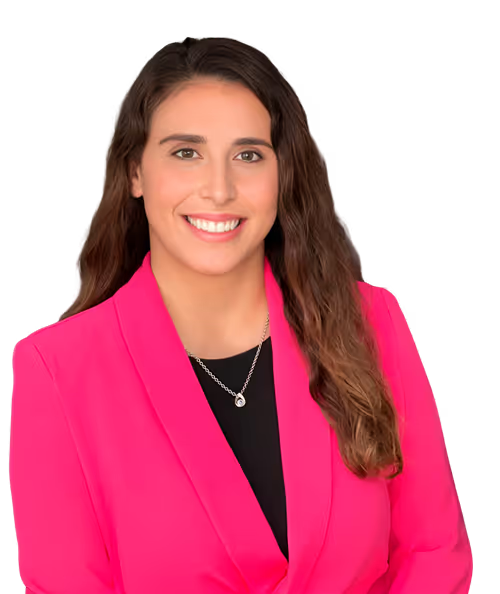
With over 14 years of practicing family law in the Sacramento, Yolo, and Placer County courts, I have represented clients seeking to increase, decrease, or terminate support orders. I know the Sacramento County Family Law Division's procedures, the income documentation judges expect, and the arguments that move cases forward efficiently.
That's why I built AF Law on core principles:
- Strategic calculation: Every modification request is built on verified income figures, current guideline math, and documented evidence of what changed and when.
- Direct assessment: I tell you upfront whether your circumstances meet the legal threshold for modification — no filing just to file.
- No sugar-coating: If the numbers don't support a modification, I say so before you spend money on a hearing you won't win.
Why Clients in Sacramento Choose AF Law
Honesty. Strategy. Results.
.avif)
Honest Assessment. No False Promises.
.avif)
Courtroom-Ready Representation.

Trusted. Referred. Retained.
Serving Northern California
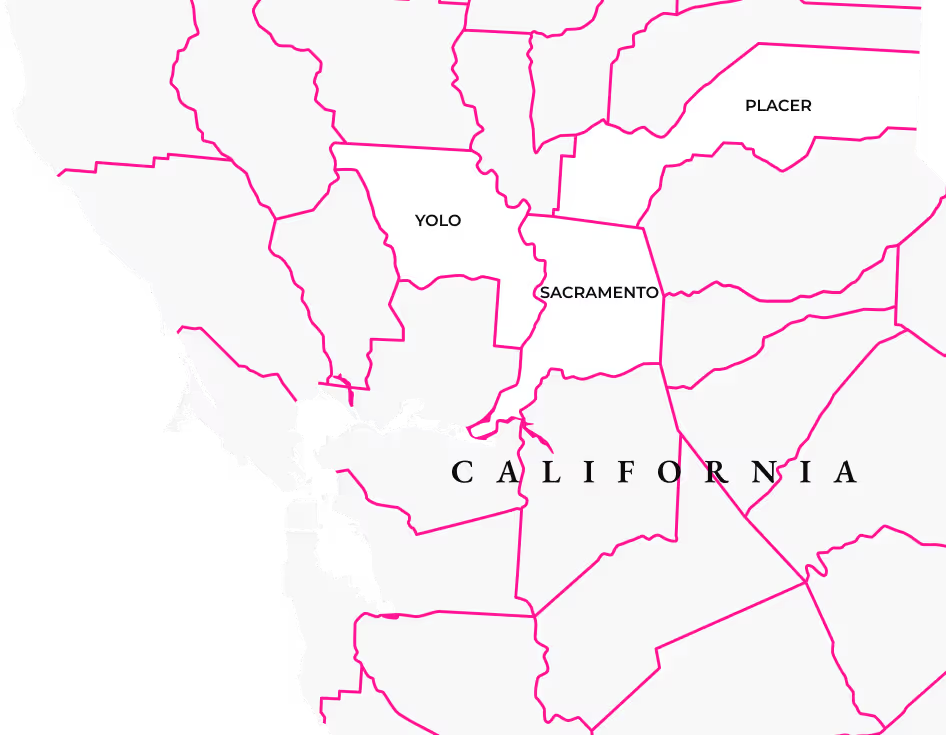
Support modification representation across three counties. AF Law provides representation to people across the following areas:
- Sacramento County: Downtown, Elk Grove, Citrus Heights, Folsom
- Yolo County: Woodland, Davis, West Sacramento
- Placer County: Roseville, Rocklin, Lincoln, Auburn

Monday - Thursday: 9:00 am-5.00 pm
Friday: 9:00 am-1.00 pm
Saturday - Sunday: Closed
Your Support Order Should Reflect Your Current Life
Every month without a modification is a month you pay or receive based on outdated facts. California law prohibits courts from backdating changes to what’s owed before the filing date. The cost of inaction compounds. I review your current order, calculate what it should be under current circumstances, and tell you directly whether filing makes financial sense.
Frequently Asked Questions
Attorney fees for support modification in Sacramento County typically range from $2,500 to $10,000, depending on whether the modification is contested. Filing fees with the Sacramento Superior Court are approximately $60 to $215. Uncontested modifications that require only a stipulated order cost significantly less than contested hearings that require financial discovery and multiple court appearances.
Uncontested modifications through a stipulated order can be finalized in four to eight weeks. Contested cases that require a hearing typically take three to five months from filing to order, depending on court calendar availability. Complex cases involving business income, hidden assets, or disputed custody time may take six to twelve months if discovery is required.
Job loss qualifies as a material change in circumstances under California Family Code § 3651 if the loss was involuntary and the reduction in income is documented. Courts expect evidence that you are actively seeking comparable employment. Voluntary resignation or intentional underemployment does not automatically reduce support obligations, and courts can impute income based on earning capacity rather than actual income.
Remarriage of the supported spouse automatically terminates spousal support in California under Family Code § 4337. Cohabitation with a new partner does not automatically end support, but it creates a rebuttable presumption of reduced need under Family Code § 4323. I file the motion to terminate or reduce support with documented evidence of the change in living arrangements.
Informal agreements between parents have no legal force in California. A written agreement to accept less child support than the court-ordered amount is unenforceable. The only way to legally change a support obligation is through a court order. I prepare stipulated modification orders that both parties sign and submit to the court for approval, a process that is faster and less expensive than a contested hearing.
When a party refuses to voluntarily produce income documentation, I serve formal discovery requests, including interrogatories, requests for production, and subpoenas, on employers, banks, or the Franchise Tax Board. Sacramento courts impose sanctions on parties who obstruct discovery in support cases. I use every procedural tool available to obtain accurate financial records before the hearing.