Divorce changes your family structure, but it doesn't have to destabilize your children. California law builds specific protections around minor children in every dissolution case, from mandatory custody mediation to guideline-based support calculations and parenting plan requirements.
As a Sacramento divorce attorney with 14+ years of experience representing parents through divorce, I've seen the difference preparation makes. This guide covers what California parents need to know before filing, during litigation, and after the judgment is entered.
California's Legal Framework for Divorcing Parents
Every California divorce involving minor children triggers a defined set of statutory requirements. The court reviews custody, visitation, child support, and parental responsibilities before granting any judgment of dissolution.
Residency and Filing Requirements
Before you can file for divorce in California, one spouse must have lived in the state for six months and in the filing county for three months. Sacramento, Yolo, and Placer County residents file at the family court serving their jurisdiction. The Petition for Dissolution (Form FL-100) must identify all minor children of the marriage by name and date of birth.
The Best Interests Standard
California Family Code Section 3011 directs courts to decide custody based on the child's health, safety, and welfare. Judges weigh each parent's history of care, any documented domestic violence or substance abuse, and the child's existing bonds with each parent. The standard is fact-driven, not gender-based.
Mandatory Custody Mediation
Sacramento County, Yolo County, and Placer County require parents in contested custody cases to attend Family Court Services mediation before a judge will hear the dispute. The mediator helps parents draft a parenting plan, and if no agreement is reached, the case proceeds to a hearing. Preparation for mediation often determines the outcome of the entire custody case.
How California Courts Decide Custody
California recognizes two distinct categories of custody, and each affects your parental authority in different ways. The court can award either category jointly or to one parent alone, depending on the facts of your case.
Legal Custody Versus Physical Custody
Legal custody covers decision-making authority over education, healthcare, and religious upbringing. Physical custody determines where the children live and the time-share between parents. Joint legal custody is the default presumption in California, while physical custody arrangements vary widely based on each parent's availability and the children's needs.
Factors That Influence Custody Outcomes
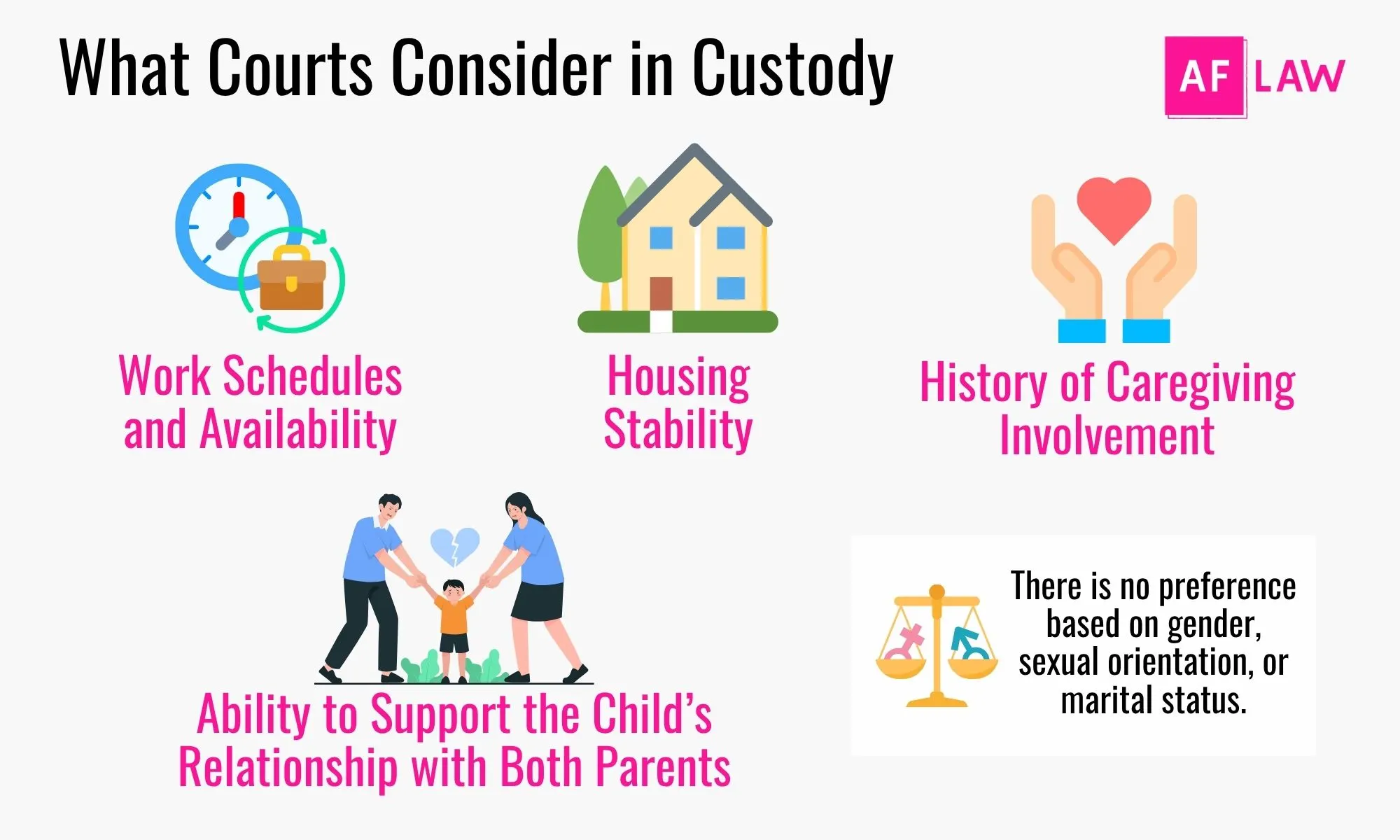
Sacramento County judges examine each parent's work schedule, housing stability, history of involvement in school and medical decisions, and ability to support the child's relationship with the other parent. California Family Code Section 3040 prohibits any preference based on the parent's gender, sexual orientation, or marital status.
When Domestic Violence Affects Custody
California Family Code Section 3044 creates a rebuttable presumption against awarding joint or sole custody to a parent found to have committed domestic violence within the previous five years. The presumption applies to physical and legal custody, and overcoming it requires specific evidence, including completion of a 52-week batterer's program and compliance with all protective orders.
Building a Parenting Plan That Works
A parenting plan is the written document that controls how parents share time and decision-making after the divorce. California courts require a parenting plan in every case involving minor children, even when parents agree on all terms.
Required Components of Every Plan
Your parenting plan must specify a regular timesharing schedule, holiday and vacation arrangements, transportation and exchange logistics, communication rules between parent and child, and a process for resolving future disputes. Courts in Sacramento County reject vague plans that lack concrete schedules or fail to address common scenarios.
Age-Appropriate Schedules
Infants and toddlers typically need shorter, more frequent contact with both parents to maintain attachment. School-age children adapt to longer blocks of time. Teenagers' schedules increasingly accommodate school, sports, and social commitments, and California courts give weight to a mature minor's preferences under Family Code Section 3042.
Common Schedule Structures
Parents in Sacramento, Yolo, and Placer counties most often use one of several recognized structures: a 2-2-3 rotation for younger children, a 2-2-5-5 plan for school-aged children, week-on/week-off for older children, alternating weekends with one weekday for the non-custodial parent, or a primary residence with extended summer time for the other parent. The right structure depends on commute distances, school location, and each parent's work schedule.
#cta_start
Worried About How Divorce Will Affect Your Kids?
Custody and parenting decisions made today shape your children's daily lives for years. Let's review your situation and build a parenting plan that protects your relationship with your kids.
#cta_end
Child Support in California Divorces
Child support is calculated using a statewide formula codified in California Family Code Section 4055. The calculation produces a presumptively correct amount that courts apply in every case unless specific factors justify a deviation.
Guideline Calculation Inputs
The formula uses each parent's net monthly disposable income, the percentage of time each parent has primary physical responsibility for the children, and the number of children supported. Tax filing status, mandatory retirement contributions, union dues, health insurance premiums, and prior support obligations also factor into the calculation.
Add-Ons and Special Circumstances
Beyond base support, California courts require parents to share child care costs incurred for employment, uninsured medical expenses, and educational costs related to the children's special needs. Courts can also order contributions for extracurricular activities, travel for visitation, and private school tuition when justified by the family's history.
Modifying Support Orders
A child support order can be modified when either parent experiences a significant change in income, when custodial time shifts materially, or when the children's needs change. Modifications are not retroactive beyond the date of filing, so parents experiencing income loss should file promptly rather than waiting.
Communicating with Your Children During Divorce

How parents handle communication during divorce affects children's adjustment and the court's evaluation of each parent. California family courts assess whether each parent supports the child's relationship with the other parent under the "friendly parent" doctrine recognized in Family Code Section 3040.
What to Tell Your Children
Children deserve honest, age-appropriate information without details about marital conflict, legal strategy, or the other parent's failings. Both parents should communicate the same message when possible: the divorce is between the adults, both parents love them, and the children are not at fault.
What to Avoid
Disparaging the other parent in front of children, using kids as messengers, questioning them about the other parent's household, or involving them in legal decisions can all damage your custody case. Sacramento County courts treat parental alienation as a serious factor in custody determinations.
Protecting Children from Conflict
Reduce contact with the other parent at exchanges, communicate through written channels like email or co-parenting apps when tension is high, and keep court documents and conversations about the case away from your children. These steps protect your kids and document your willingness to co-parent constructively.
Common Mistakes Parents Make in California Divorces
Years of representing parents in Sacramento County family court have shown me the patterns that hurt cases and the choices that strengthen them. Avoiding these mistakes preserves your legal position and your relationship with your children.
Moving Out Without a Plan
Leaving the family home before custody is established can create a status quo that favors the parent who stayed. If safety concerns require you to leave, document the reason, secure temporary custody orders quickly, and maintain regular contact with the children.
Discussing the Case with Your Children

Sharing court filings, discussing the other parent's behavior, or asking children to choose sides can result in court-ordered counseling, supervised visitation, or a loss of custody time. Judges consistently penalize parents who place children in the middle of adult conflict.
Failing to Document Parenting Time
Keep a calendar of every overnight, school pickup, medical appointment, and extracurricular activity you attend with your children. This record becomes critical evidence if custody is contested and supports any future modification request.
Ignoring Mediation Preparation
Sacramento County's Family Court Services mediator submits a written recommendation to the judge when parents cannot agree. Walking into mediation without a clear proposal, supporting evidence, or knowledge of the children's schedule often produces recommendations that don't reflect your parenting role.
Stopping Support Payments
Withholding child support because the other parent denies visitation is a separate violation under California law. Courts treat support and custody as independent obligations, and unpaid support accrues at 10% interest under Code of Civil Procedure Section 685.010.
Post-Judgment Issues Parents Face
Divorce judgments addressing custody, support, and parenting time can be modified when circumstances change. Sacramento, Yolo, and Placer County courts retain jurisdiction over child-related orders until each child reaches the age of majority.
Relocation Requests

A parent who wants to move with the children must follow the procedures established in Marriage of LaMusga (2004) 32 Cal. 4th 1072. The court evaluates the reason for the move, the distance, the impact on the child's relationship with the other parent, and the child's age and needs. Move-away cases require careful legal preparation regardless of which side you're on.
Modifying Custody and Support
A material change in circumstances justifies modification of custody, parenting time, or support. Examples include a parent's job loss, a child's developmental changes, documented safety concerns, or one parent's failure to follow the existing order. Modifications require a formal Request for Order filed with the court that issued the original judgment.
Enforcement of Court Orders
When a parent violates custody or support orders, California provides multiple enforcement tools: contempt proceedings, wage garnishment, license suspension, and tax refund interception for support arrears. The Sacramento County Department of Child Support Services handles agency-administered enforcement for support obligations.
Protect Your Children. Protect Your Future.
Divorce with kids in California involves overlapping legal requirements, mandatory court procedures, and decisions that affect your children for years. The choices you make at filing, during mediation, and in negotiating your parenting plan determine your custodial relationship, your financial obligations, and your kids' stability.
AF Law represents parents through every stage of a California divorce, from initial filing through post-judgment modifications. I provide direct counsel on custody strategy, child support calculations, and parenting plan development across Sacramento, Yolo, and Placer counties. Contact AF Law today to schedule your consultation.

%205.avif)