Marriage doesn't always work out, but divorce isn't always the answer. Legal separation in California offers couples a path to live apart while maintaining their marital status, preserving retirement benefits, health insurance coverage, and religious commitments.
As your Sacramento family attorney, I cut through the complexity of filing for legal separation in California. This guide covers exactly what you need to file, serve, and finalize your separation case in Sacramento County and throughout Northern California.
Legal Separation vs. Divorce in California
California legal separation differs from California divorce in three critical ways that affect your marital status, timeline, and legal options.
Marital Status Remains Intact
Legal separation keeps both spouses legally married under California family law. Neither party can remarry or enter into a new domestic partnership until they convert the case to a divorce or file a separate dissolution case.
No Residency Requirements
Filing for legal separation in California requires no waiting period for state residency. Divorce requires at least six months of California residency plus three months in your filing county, making legal separation accessible to couples who recently relocated.
No Mandatory Waiting Period
Divorce cases have a mandatory six-month waiting period from the date the other spouse is served with the initial divorce petition and summons. Legal separation in California has no such delay and can be finalized immediately once all issues are resolved.
Why Choose Legal Separation
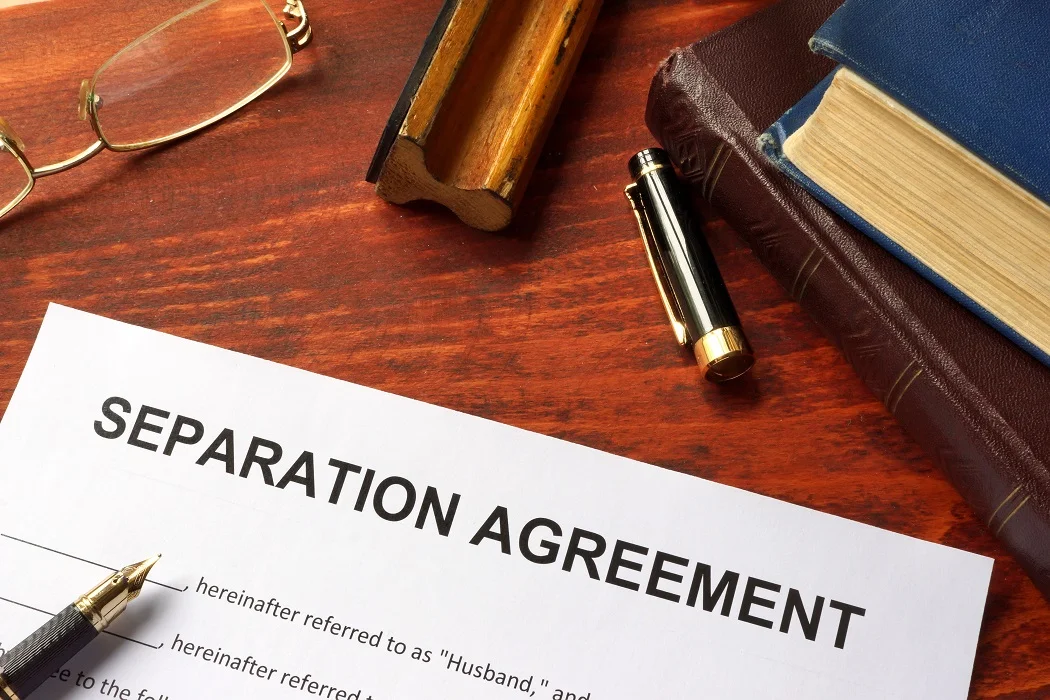
Several practical and emotional considerations make legal separation the right choice for many California couples.
- Health insurance preservation: Remaining legally married often preserves health insurance coverage through the other spouse's employer-sponsored plan, while divorce terminates this coverage in most cases.
- Retirement and Social Security benefits: Legal separation protects certain benefits tied to marital status, including military and government retirement benefits that require couples to remain legally married, and Social Security spousal benefits that typically require 10 years of marriage.
- Religious or personal reasons: Many religious traditions prohibit divorce, making legal separation a practical solution for couples whose faith prevents divorce proceedings while still addressing financial support, child custody, and property division needs.
- Trial period for reconciliation: Physical separation allows couples space to evaluate their marriage, and some reconcile after legal separation by filing a motion to vacate the judgment, which proves simpler than remarrying after divorce.
Legal separation provides the same court orders for support and custody as divorce while preserving your legally married status and the benefits that come with it.
Step-by-Step: Filing for Legal Separation in California
The legal process mirrors divorce procedures with key differences at each step.
Step 1: Consult an Experienced Family Law Attorney
Before filing any court forms, consult with a California family law attorney to evaluate whether legal separation serves your needs better than divorce or a simple separation agreement. An attorney can explain how community property laws apply to your specific assets, calculate potential spousal support obligations under California guidelines, identify issues requiring court intervention versus mutual agreement, and develop a strategic approach to protect your interests throughout the legal process.
Step 2: Complete Required Court Forms
Start your family law case by obtaining forms from California courts:
- Petition (Form FL-100): Check the legal separation box rather than dissolution.
- Summons (Form FL-110): Includes automatic temporary restraining orders.
- Declaration Under Uniform Child Custody Jurisdiction (Form FL-105): Required only if you have minor children.
Step 3: File Forms with Superior Court
Take your completed forms to the clerk's office at your county's superior court. Sacramento County residents file at the William R. Ridgeway Family Relations Courthouse. Filing fee typically ranges from $435 to $450, though fees may vary slightly by county, so verify current costs with your local courthouse. Courts offer fee waivers through Form FW-001 to those who meet income eligibility requirements. The court clerk stamps your original documents and returns copies to you, which you'll need for serving the other party and maintaining your personal records.
Step 4: Serve the Other Spouse
California law requires proper service of the legal separation documents on the other party. Someone age 18 or older who is not involved in your case must personally deliver stamped copies of all filed forms, plus a blank Response form (FL-120), to your spouse. The person serving the papers on your spouse cannot be you, and they must complete a Proof of Service (Form FL-115) that describes when, where, and how service was made. The completed proof of service gets filed with the court, establishing the official start date for response deadlines and automatic restraining orders.
Step 5: Wait for Response Period
The other spouse has 30 days after being served to file a Response (Form FL-120). During this response period, automatic restraining orders take effect, preventing either party from transferring property, changing insurance beneficiaries, or relocating children without written agreement or court permission. If they disagree with your requests regarding child custody arrangements, financial support, or property division, the legal separation case proceeds to negotiation or court hearings.
Step 6: Exchange Financial Disclosures
Both parties must complete and serve preliminary financial disclosures within 60 days of filing:
- Declaration of Disclosure (Form FL-140)
- With the accompanying Declaration of Material Facts
- Income and Expense Declaration (Form FL-150)
- Schedule of Assets and Debts (Form FL-142)
- All tax returns filed in the previous two years
These documents are not filed with the court; they must be served on the other spouse. The disclosure requirement ensures that both parties have a complete financial picture before agreeing to any property division or support arrangements, and courts can penalize parties who fail to disclose assets.
Step 7: Negotiate or Litigate Terms
Most separation cases resolve through direct negotiation with family law attorneys to draft a separation agreement, mediation with a neutral mediator to facilitate discussions, or, if an agreement proves impossible, court hearings. Sacramento County cases often go through court-connected mediation services for child custody disputes before any hearing.
Step 8: Finalize the Judgment
Once all issues are resolved, file the final judgment documents with the court:
- Judgment (Form FL-180)
- Notice of Entry of Judgment (Form FL-190)
- Marital Settlement Agreement (if applicable)
The judge reviews all paperwork to ensure compliance with California family law before signing the judgment. Unlike divorce cases, legal separation judgments become final immediately, with no waiting period, formally establishing your legal separation status and making all custody, support, and property orders enforceable by the court.
California Legal Separation Grounds
California law recognizes two grounds for legal separation under California Family Code Section 2310.
Irreconcilable Differences
Most couples seeking legal separation cite irreconcilable differences, as defined in California Family Code Section 2311, as a substantial reason for the marriage's inability to continue. California operates as a no-fault state, meaning you don't need to prove wrongdoing to file for legal separation. Courts simply require that these differences caused the irremediable breakdown of the marriage relationship.
Permanent Legal Incapacity to Make Decisions
The second ground under California Family Code Section 2310 requires proof through competent medical or psychiatric testimony that one spouse has a permanent legal incapacity to make decisions. California Family Code Section 2332 sets out the procedures for serving a spouse who lacks legal capacity. This ground rarely applies in legal separation cases due to strict evidentiary requirements and the burden of establishing that the incapacity is permanent.
Common Legal Separation Issues
Once you file for legal separation, several practical matters require resolution through court orders or mutual agreement between you and your spouse.
Child Custody and Support

Legal separation doesn't diminish either parent's rights to their children. Courts apply the same best interests standard used in divorce cases to establish legal custody (decision-making authority) and physical custody (where children primarily reside). California child support guidelines apply equally in legal separation cases, using both parents' incomes and time-share percentages to calculate appropriate support amounts that continue regardless of your marital status.
Spousal Support and Property Division
Courts consider the length of the marriage, each spouse's income and earning capacity, the standard of living during the marriage, and other factors under California Family Code Section 4320 when determining spousal support. California's community property laws require an equal division of all assets and debts acquired during marriage, unless the couple agrees otherwise. The date of separation determines when community property acquisition stops and separate property begins.
Domestic Violence Protections
Couples experiencing domestic violence can request restraining orders through legal separation proceedings. The court can issue protective orders that prevent contact, require one party to vacate the residence, and establish supervised visitation with the children.
Control Your Future. Start Now.
Legal separation provides immediate court orders without waiting six months for a divorce to be granted. The process protects your rights while preserving your marital status and the benefits that accompany it, including health insurance coverage, retirement benefits, and Social Security eligibility. Whether you need temporary separation to evaluate your marriage or permanent separation for religious reasons, the legal framework addresses custody, support, and property division with the same enforceability as divorce.
I've spent 14+ years practicing California family law in Sacramento, Placer, and Yolo counties, providing direct answers and strategic advocacy for complex family law cases. My approach cuts through unnecessary conflict to focus on what actually matters: protecting your assets, securing fair support arrangements, and establishing clear custody orders. Contact AF Law Firm today for your consultation.

%205.avif)