Your marriage didn’t fail overnight. Like most, it likely unraveled slowly through broken promises, silent treatment, and the growing awareness that you're living separate lives under the same roof.
If you're wondering whether it's time for a divorce, it's important to understand the signs. I'm Jessica Abdollahi, a Sacramento divorce attorney with over 14 years of experience in family law. In this article, I'll highlight the key warning signs that your marriage may be reaching its breaking point and what to expect when that time comes.
Clear Signs It's Time for a Divorce
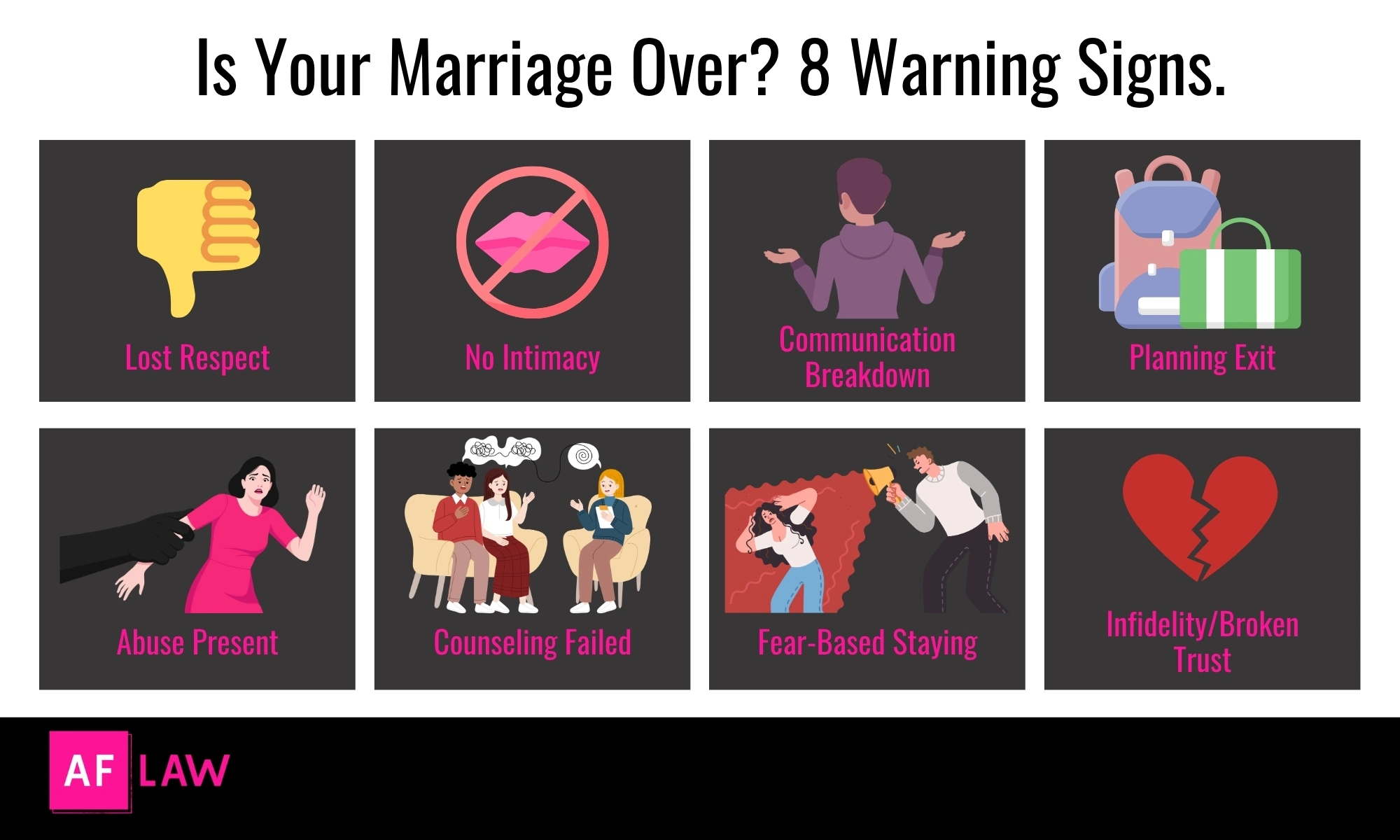
Recognizing when a marriage has ended requires honesty about what's actually happening in your relationship. These warning signs indicate when it's time to get a divorce and when staying hurts more than leaving.
1. Respect Has Disappeared Completely
You no longer believe what your spouse says. Their broken promises accumulate, each one eroding whatever trust remains. Reliability vanishes when you plan around their absence rather than relying on their presence. California Family Code governs how marriages dissolve, but no law can force two people to respect each other. When your spouse dismisses your concerns, constantly criticizes you, and places personal interests above family needs, empathy has left the relationship. What once felt like a healthy relationship now feels toxic, and no conversation turns productive anymore.
2. Physical and Emotional Intimacy No Longer Exist
Physical intimacy disappeared months or years ago. You share a bed but nothing else. The absence of affection speaks louder than any argument. Your current spouse is no longer your best friend. When something wonderful happens, you call someone else to celebrate. When a crisis strikes, your support system excludes the person who should lead it. This emotional divorce often precedes the legal one by years. The emotional connection that once made your marriage work has vanished, leaving you feeling more like roommates than partners.
3. Communication Has Broken Down Beyond Repair
You stopped fighting because you no longer cared enough. The silent treatment can last from hours to days. Past issues surface in every argument because forgiveness has not occurred. Conflict focuses on winning, placing blame, and inflicting damage rather than preserving the relationship. Criticism, contempt, defensiveness, and stonewalling, what marriage researchers call the four horsemen, dominate every interaction. When you do try to talk, every conversation turns into an argument or ends in silence, which are clear red flags that communication is beyond repair.
4. You're Already Planning Your Exit
You opened separate bank accounts. You're pursuing new job opportunities to ensure you can support yourself. You've researched divorce costs, custody arrangements, and how child support works in California. Relief replaces sadness when you imagine divorce. You can picture a happier life without your spouse more clearly than you can imagine fixing your marriage. This research and mental preparation reveal you've moved beyond idle thoughts to serious contemplation.
5. Abuse Makes Leaving Non-Negotiable
Domestic violence can escalate. What begins with a shove can end with serious injury or worse. Constant criticism, manipulation, and control tactics destroy your sense of self. Your spouse blames you for everything and dismisses your mental health concerns. You change your behavior to avoid triggering anger. Heart rate rises with stress upon their arrival home. These physical and emotional reactions signal clear signs that you need to start thinking about a divorce. California law provides immediate protection through restraining orders, but leaving the marriage, and sometimes the home, remains the only way to ensure long-term safety.
6. Marriage Counseling Has Failed Completely
Your spouse won't attend sessions, dismisses the therapist's suggestions, or attends physically while remaining mentally absent. A family therapist can't save a marriage when only one person wants to improve it. You attended counseling, read books, made promises, and set goals. Nothing changed because real change requires both spouses to invest energy and hope. You no longer believe the marriage can improve.
7. Fear Is the Only Reason You're Staying
Financial concerns feel overwhelming. Divorce costs money, and establishing separate households strains budgets. Being alone terrifies you. Uncertainty about the future paralyzes you. But the reality that you may not want to acknowledge is that you're already lonely. Emotional isolation within marriage hurts worse than being physically alone. These practical concerns matter, but they shouldn't be the only reason you remain married. Many couples stay together out of fear rather than love. Making the right decision means choosing your well-being over comfort, even when it's terrifying.
8. Infidelity Has Destroyed Trust Permanently
Whether it's your spouse or you seeking connection elsewhere, infidelity signals fundamental problems in the marriage. If both spouses are cheating, the marriage is heading straight to divorce. Broken trust is hard to rebuild and may demand more than you're ready to give, particularly when your spouse remains unapologetic or unwilling to address the issues that led to the affair. Many spouses choose divorce once they realize they're investing emotional or physical energy anywhere but their marriage.
The Kids Question: Staying vs. Leaving
Children complicate every divorce decision, but shouldn't trap you in misery. The "stay together for the kids" argument sounds noble, but often creates more harm than good.
What Research Actually Shows
Studies show that children thrive in peaceful, but divorced households, more than in high-conflict marriages. Kids absorb tension, learn unhealthy communication, and see loveless marriages as normal. Divorce, when handled well, causes less long-term harm than years of living in a tense, unhappy home.
Preparing for Successful Co-Parenting
If you're ready to divorce, preparation minimizes disruption to your children. Research schools, neighborhoods, and schedules that maintain stability. Understand child custody arrangements in Sacramento County and how to protect your parental rights. Plan living situations that allow both parents meaningful time with the kids. This thoughtful approach demonstrates you're prioritizing their needs even as you pursue your own well-being.
Staying in a Bad Marriage vs. Peaceful Divorce
The decision becomes clearer when you compare actual outcomes. Children's well-being depends more on the quality of their home environment than whether their parents share an address.
Your children deserve emotionally healthy role models. An unhappy marriage teaches them to accept less than they deserve in their future relationships. When divorce is handled properly, it demonstrates that people can make difficult choices with dignity and move toward better lives.
Important Considerations Before Filing
Divorce involves more than emotional readiness. These practical factors affect timing and outcomes.
Your Financial Picture in California
The cost of a divorce in Sacramento can vary widely depending on factors such as the complexity of the case, whether it is contested, and whether issues like property division, custody, or support are involved. California's community property laws mean all assets and debts acquired during marriage get divided 50/50. Before filing, understand your complete financial situation, including bank accounts, retirement funds, debts, and property values. Document everything. Property division becomes simpler when you know exactly what exists to divide.
California courts can order one spouse to pay the other's attorney fees when a significant income disparity exists. Sacramento Superior Court also offers fee waivers for low-income filers based on California's income guidelines. Financial concerns shouldn't trap you in a harmful marriage.
Building Your Support System in California
Identify friends and family members who will provide emotional backup during divorce proceedings. Consider joining a Sacramento-area divorce support group. Many people report feeling isolated during divorce, so having a strong support system combats that loneliness.
Professional help matters too. Beyond your attorney, you might need a therapist to process the emotional aspects, a financial advisor to plan your post-divorce budget based on California's community property rules, or a mediator if your spouse agrees to collaborative dissolution.
Alternative Divorce Options in California
Not every California divorce requires courtroom battles. Your situation determines which approach works for you.
Timing Your California Divorce Filing
California Family Code requires a minimum of six months from filing to finalization. Beyond that requirement, timing depends on your circumstances. You may want to consider how separation could affect practical matters such as health insurance coverage and other financial issues. If you have been married for nearly 10 years, that timing may also significantly affect the duration of spousal support under California law. Our firm does not provide tax advice, so any tax-related questions should be reviewed with a qualified tax professional.
Getting Legal Help for Your California Divorce
When you're ready to get a divorce, professional legal guidance protects your interests throughout the process. California's family law system involves complex procedures, strict deadlines, and detailed paperwork requirements.
Working with a Sacramento divorce attorney helps you:
- Ensure a fair division of marital assets and debts according to California's community property laws.
- Protect your parental rights with custody arrangements based on California court guidelines.
- Accurately calculate child and temporary spousal support using California's guideline calculators.
- File required forms with the Sacramento Superior Court on time.
- Avoid costly mistakes that could impact your financial future.
Sacramento County family courts handle numerous divorce cases each month. An attorney familiar with local judges and procedures offers advantages that self-represented parties lack, ensuring your rights are protected in uncontested divorce, mediation, or litigation.
Take Control of Your Future
Deciding when to get a divorce ranks among life's hardest choices. If you recognize multiple signs, it's time for a divorce in your relationship; staying rarely improves the situation.
The family lawyers in Sacramento at AF Law Firm handle divorce cases across Sacramento, Yolo, and Placer counties. We provide direct answers on when to file for divorce, California's divorce process, and what to expect. Contact us to discuss your specific situation.

%205.avif)