Divorce doesn't just end a marriage; it triggers a grieving process as real as mourning a physical death. The loss of your relationship, shared future, and daily routines creates emotional pain that demands acknowledgment.
As a Sacramento divorce lawyer, I recognize that while legal proceedings have clear steps, the emotional journey follows its own path. This guide breaks down the divorce grieving process so you can recognize where you are and what comes next.
The Five Stages of Grief in Divorce

The stages of grief follow a pattern first identified by psychiatrist Elisabeth Kübler-Ross. The five stages: denial, anger, bargaining, depression, and acceptance, aren't a rigid checklist. You might experience them out of order, revisit earlier stages, or skip some entirely.
Denial Stage: When Reality Hasn't Set In
The initial shock of divorce often triggers a natural defense mechanism where your mind refuses to accept what's happening. You might find yourself acting as if the separation is temporary, avoiding conversations about the divorce, or continuing routines as if nothing has changed.
Common signs of denial:
- Telling yourself the split is just a break, not permanent.
- Avoiding divorce papers or legal consultations.
- Maintaining hope for reconciliation despite clear evidence otherwise.
This stage serves as emotional padding, giving you time to absorb the reality gradually rather than all at once. Most people move through denial within weeks, though some linger longer, depending on whether they initiated the divorce or not.
Anger Stage: When Frustration Takes Over
Anger provides energy during the divorce process, but it creates a false sense of control. You might direct rage at your ex-spouse, yourself, the legal system, or even family members who offer support.
Anger manifests as:
- Resentment about wasted years or broken promises.
- Blame directed at your spouse for specific failures.
- Frustration with how slowly the divorce is taking to finalize.
This stage feels powerful because anger is active, unlike the helplessness of denial. Channel this energy productively. Document what you need for California divorce proceedings, organize financial records, or focus on self-care routines.
Important note: If anger persists beyond several months or escalates into thoughts of violence, seek support from a mental health professional immediately.
Bargaining Stage: Negotiating with Reality
The bargaining stage involves "what-if" thinking as your mind attempts to reverse the divorce. You might replay conversations, wishing you'd acted differently, or imagine scenarios where the relationship could work if specific conditions changed.
This internal negotiation often includes attempts to postpone accepting your new reality. Some people bargain with a higher power, promising changes in exchange for saving the marriage. Others focus bargaining efforts on their ex-spouse, suggesting counseling or trial separations.
Bargaining rarely lasts long because you eventually recognize that the marriage has ended, regardless of hypothetical changes. This realization typically pushes you toward the next stage.
Depression Stage: The Deep Sadness Sets In

Depression during divorce represents profound sadness as reality sets in fully. This isn't clinical depression requiring medication, though some people develop that condition and need professional treatment. This grief reaction involves deep sadness about the loss of your shared life, financial security, and identity as part of a couple.
Depression symptoms include:
- Profound sadness lasting weeks or months.
- Changes in sleep patterns or appetite.
- Loss of interest in activities you once enjoyed.
- Difficulty functioning in daily life or as a single parent.
Many emotions surface during this stage: loneliness, fear about your new life, and worry about financial support. Spending time with your strong support system helps, as does maintaining routines that provide structure. If you feel stuck in depression beyond several months, contact a licensed therapist who specializes in divorce recovery.
Acceptance Stage: Finding Your New Normal
Acceptance doesn't mean happiness about the divorce; it means acknowledging your new reality without constant emotional pain. You begin navigating life as a single person, making plans that don't include your former spouse, and feeling validated in your identity outside the marriage.
Signs you've reached acceptance:
- Making decisions about your future without consulting your ex.
- Experiencing long periods without intense grief.
- Engaging in new activities or relationships.
- Feeling hope about possibilities ahead.
This final stage allows you to move forward while carrying lessons from your marriage. You might still have sad moments, particularly during holidays or anniversaries, but these don't derail your overall progress.
Why Your Divorce Grief Feels Different
Not everyone grieves divorce the same way. Disenfranchised grief occurs when society doesn't fully recognize your loss, making you feel your pain isn't legitimate. Friends might suggest you "should be over it" faster than what feels possible, or family members might minimize your emotions because "you chose this."
Several factors affect how long each stage lasts. The person who initiated the divorce often processes earlier stages before filing, while the other spouse might just be entering denial. Divorces involving children create additional grief as you adjust to being a single parent with less time with your kids. Financial stress from divorce costs compounds emotional challenges.
Your grief also operates on a deep psychological level because divorce represents the end of your identity as a married person. This loss affects how you see yourself and how others interact with you.
Moving Through Grief: What Actually Helps

The healing process requires both time and intentional action. Healthy coping strategies make the difference between getting stuck in a stage and progressing toward acceptance.
Effective coping skills include:
- Joining divorce support groups where you connect with others facing similar challenges.
- Maintaining self-compassion instead of harsh self-criticism.
- Establishing new routines that give structure to your days.
- Seeking professional support when grief feels overwhelming.
Physical activity helps process the emotional journey by reducing stress hormones. Even brief walks provide relief from the constant mental loop of divorce thoughts. Spending time with supportive friends can help remind you that relationships continue despite this loss.
Avoid these common mistakes:
- Isolating yourself completely from social connections.
- Making major life decisions during the early stages of grief.
- Using alcohol or substances to numb feelings.
- Rushing into new relationships before processing the old one.
When Grief Requires Professional Help
While the stages represent a natural process, some situations demand intervention from a mental health professional. If depression lasts more than six months without improvement, you might have clinical depression requiring treatment beyond grief support.
Specific symptoms warrant immediate professional help, including thoughts of self-harm, inability to function in daily life, or feeling stuck in anger with escalating intensity. A licensed therapist provides tools for managing many emotions and helps you identify when feelings cross into clinical territory.
Support also matters if your ex-spouse refuses to cooperate, particularly if you're dealing with what happens when a spouse won't sign papers. Legal delays compound emotional stress, making professional support even more valuable during challenging times.
How Long Does Divorce Grief Last?
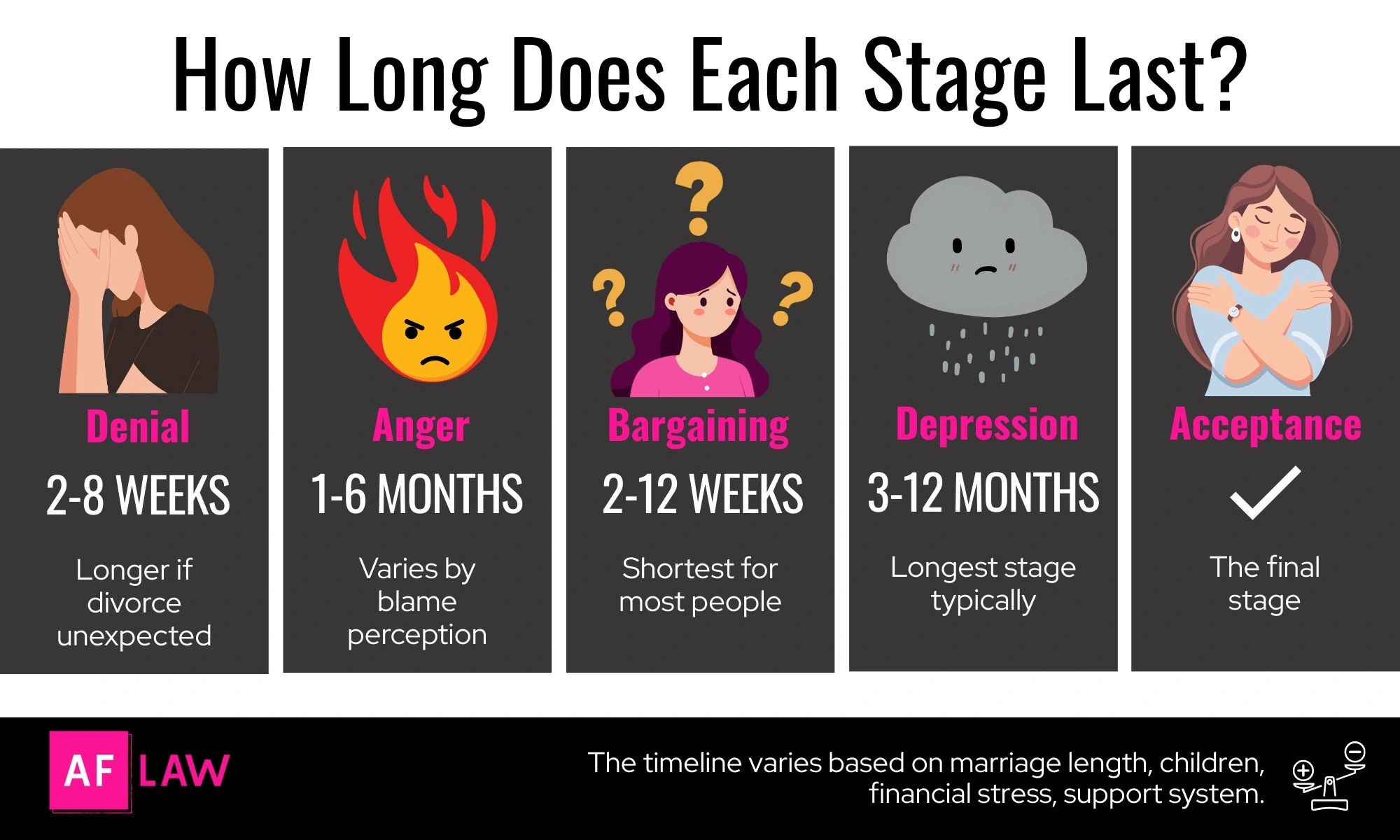
The emotionally challenging divorce recovery period varies dramatically between individuals. Research suggests most people need one to two years to process the major stages, though some move through faster, while others require a long period of several years.
Your timeline depends on multiple factors, including marriage length, whether you have children, your financial situation, and your strong support system. Someone divorcing after three years might recover within months, while a 20-year marriage dissolution typically requires extended processing time.
The question isn't whether you'll heal but how you'll support yourself through the healing process. Each person's emotional journey moves at its own pace, and forcing faster progress often backfires.
Find Clarity with Strategic Legal Support
The divorce grieving process stages reflect real loss that deserves recognition and time. You'll cycle through denial, anger, bargaining, depression, and acceptance, possibly multiple times, before reaching stability. This natural process can't be rushed, but it can be supported.
Legal proceedings add complexity to an already challenging time. Having experienced guidance helps you navigate both the emotional and practical aspects of ending your marriage. With over 14 years of experience, I help clients at AF Law make informed decisions when emotions feel overwhelming.
If you're ready to discuss your situation with a Sacramento family law firm that recognizes the full scope of what you're facing, contact us today. We'll help you move forward strategically while you do the emotional work of healing.

%205.avif)